Why savory peptides are replacing simple MSG-only formulations
MSG is still a useful savory tool. But for many food manufacturers, a single umami note is no longer enough.
Savory peptide ingredients are gaining ground because they can deliver a broader flavor profile: brothiness, depth, mouthfeel, lingering savoriness, and better balance in reduced-salt or complexity-driven formulations. For protein hydrolysate manufacturers, that shift creates a clear opportunity: move beyond commodity umami inputs and produce peptide-rich ingredients with defined sensory and processing value.
Peptarion supports that move as an enzyme supplier for protein hydrolysate production, helping manufacturers control hydrolysis behavior, manage batch repeatability, and align enzyme selection with downstream requirements.
MSG gives impact. Peptides give structure.
MSG provides a direct umami signal. It is simple, familiar, and effective in many formulations. The limitation is that it does not build the same layered savory architecture that formulators often need in soups, sauces, snacks, meat analogues, seasonings, ready meals, and culinary bases.
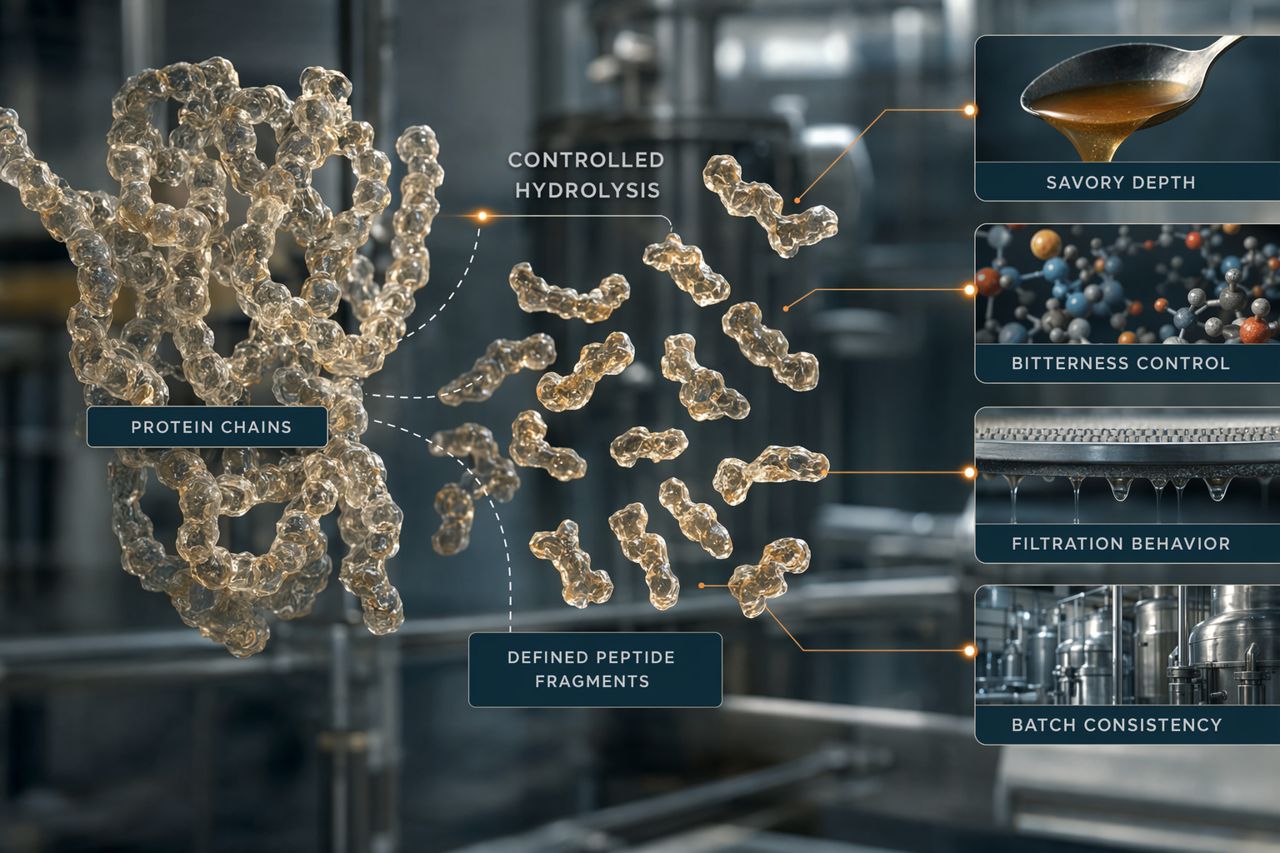
Controlled protein hydrolysis can generate peptide profiles that contribute to:
- rounded savory depth rather than a single-note taste
- broth-like, roasted, meaty, or fermented flavor direction depending on substrate and process
- improved flavor continuity through the eating experience
- better balance with salt, acid, fat, yeast extract, nucleotides, and spices
- functional mouthfeel and body in liquid or paste systems
- differentiated ingredient positioning for industrial customers
The value is not that peptides simply replace MSG one-for-one. The value is that peptide-rich hydrolysates can carry more of the formulation load.
Why the market is moving toward peptide-rich savory systems
Food formulators are under pressure to create stronger flavor performance with cleaner, more balanced ingredient systems. Many are also working with reduced sodium targets, plant protein bases, fermentation notes, and cost constraints.
Savory peptides can help because they provide a more complex flavor foundation. In the right hydrolysate, peptides do not only add umami. They can influence body, continuity, aftertaste management, and the perception of cooked or developed flavor.
That makes them attractive when a customer wants more than an additive-style flavor boost. They want an ingredient that behaves like part of the food matrix.
The manufacturing challenge: control the hydrolysis, not just the recipe
For protein hydrolysate manufacturers, savory peptide production is not just a formulation decision. It is a process-control issue.
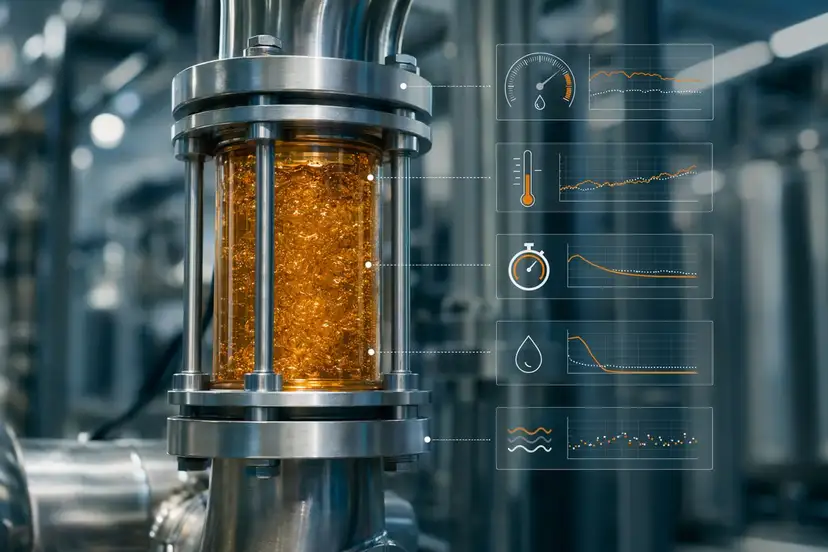
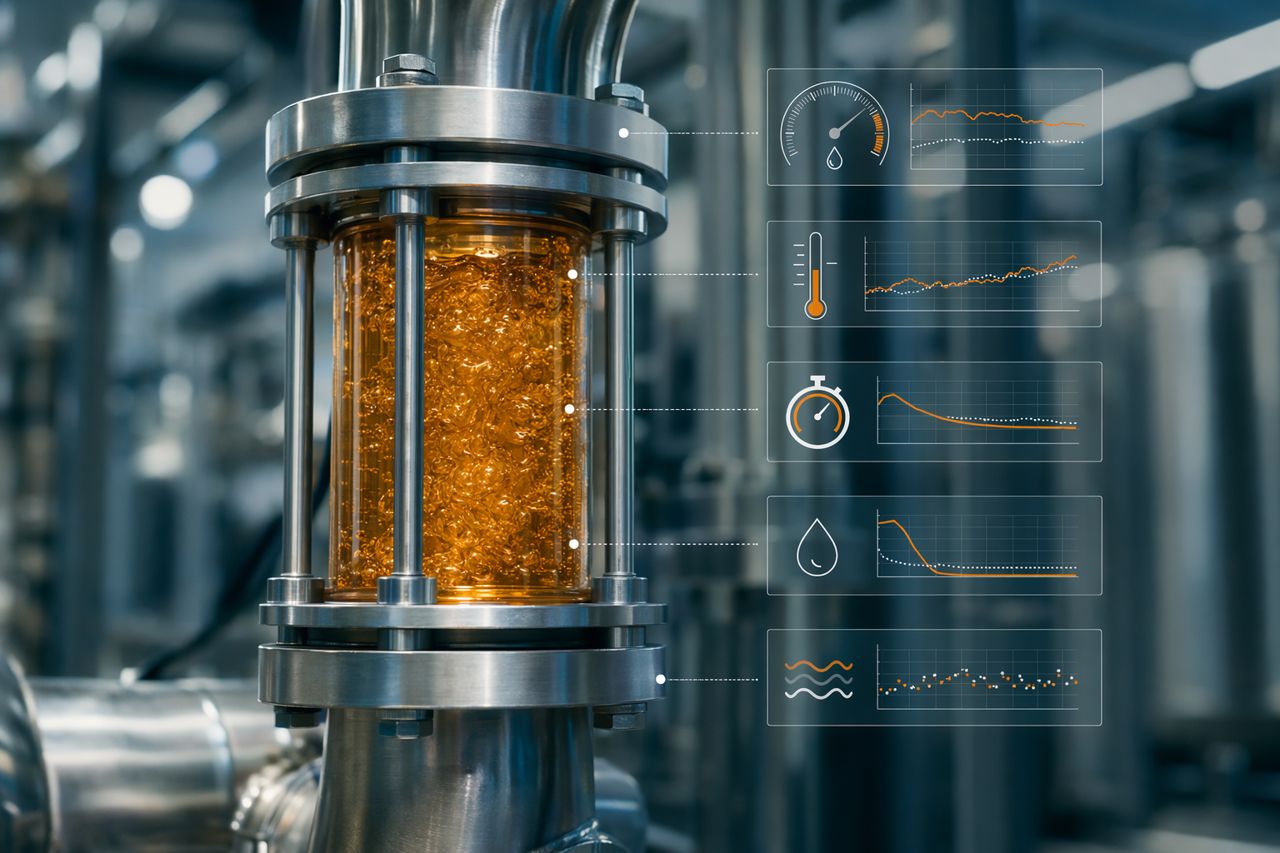
The same substrate can produce very different results depending on enzyme system, pH, temperature profile, residence time, solids level, agitation, heat treatment, and stopping point. A batch that looks acceptable in the lab can become difficult at plant scale if viscosity, bitterness, separation, or filtration behavior shifts outside the operating window.
Key production questions include:
- How fast does hydrolysis progress under the plant’s real conditions?
- Does the enzyme system support the target flavor direction?
- At what point does the profile move from savory depth toward bitterness?
- How does viscosity change during the run?
- Will the hydrolysate filter, clarify, concentrate, or dry predictably?
- Can the process be repeated across raw material variation?
- Does the final ingredient meet the customer’s sensory and handling expectations?
This is where enzyme selection becomes a commercial decision, not just a technical one.
Enzyme choice shapes the peptide profile
Different protease systems create different peptide distributions. That distribution influences flavor, mouthfeel, bitterness risk, solubility, and downstream processing behavior.
For savory hydrolysates, production teams usually need a controlled balance. Too little hydrolysis may leave the ingredient flat, heavy, or low in soluble savory impact. Too aggressive a process may create harsh bitterness, excessive breakdown, or downstream handling problems.
A practical enzyme program should be selected around:
Substrate type
Plant proteins, animal proteins, dairy proteins, yeast-derived streams, and mixed substrates all respond differently. The enzyme system needs to match protein structure, pretreatment conditions, and the target flavor profile.
Target sensory direction
A hydrolysate for broth depth is not the same as one for roasted savory impact, seafood-style complexity, plant-based meat support, or seasoning carrier function. Enzyme selection should reflect the flavor outcome, not only the hydrolysis target.
Process window
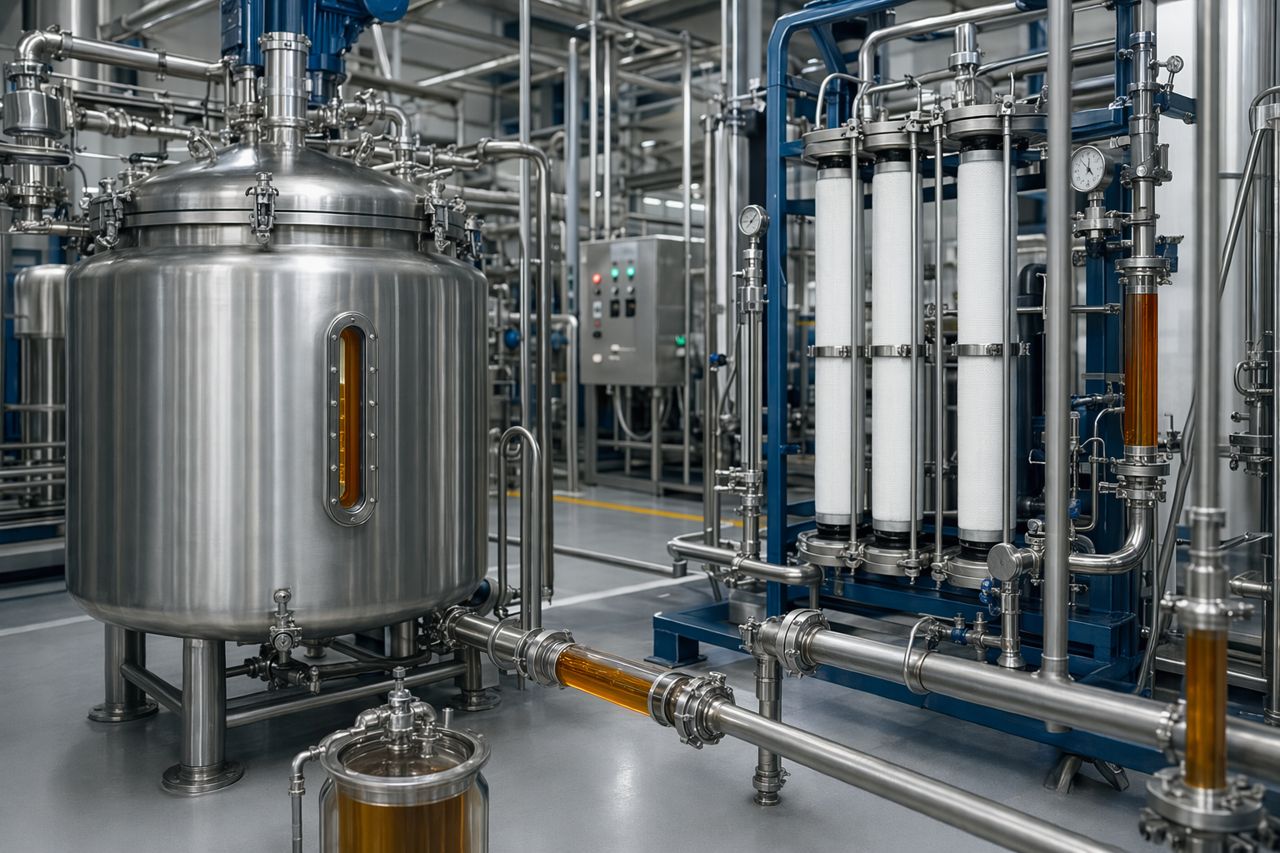
Manufacturers need enzymes that perform reliably within real plant constraints. Stable operation around defined pH, temperature, residence time, and solids conditions reduces batch drift and improves scheduling confidence.
Downstream behavior
A good peptide profile is not enough if the material becomes hard to clarify, concentrate, blend, or dry. Hydrolysis control should support the full process, including filtration behavior, viscosity shift, heat step compatibility, and final yield stability.
What replaces MSG-only thinking?
The stronger approach is not simply removing MSG. It is designing a savory system where peptide-rich hydrolysates provide the base note, and other ingredients are used with more precision.
In practice, this may mean:
- using hydrolysate peptides to create the main savory body
- reducing dependence on single-note umami boosters
- improving salt perception without relying only on sodium addition
- building a more natural broth or cooked profile
- supporting flavor masking in plant protein applications
- giving customers a more differentiated ingredient story
For hydrolysate manufacturers, this creates room for higher-value specifications and closer customer relationships. The selling point becomes controlled sensory performance, not just protein breakdown.
Operational signals that the enzyme program needs review
A manufacturer may need to review its enzyme system if production teams are seeing:
- inconsistent savory intensity from batch to batch
- bitterness appearing before the desired flavor depth is reached
- unstable viscosity during hydrolysis
- slow or unpredictable filtration
- yield variation after clarification, evaporation, or drying
- excessive dependence on downstream flavor correction
- customer complaints about harshness, flatness, or lack of body
- pilot results that do not transfer cleanly to production scale
These issues often indicate that the enzyme system and process window are not fully aligned with the intended peptide profile.
How Peptarion supports savory peptide production
Peptarion works with protein hydrolysate manufacturers that need enzyme solutions for controlled savory ingredient production. Our role is practical: help production and technical teams select enzymes that fit the substrate, the plant process, and the final customer requirement.
We focus on:
- enzyme selection for targeted hydrolysis behavior
- process-window definition for repeatable batch control
- support for bitterness management and flavor direction
- guidance around viscosity, filtration, and downstream compatibility
- scale-up support from trial work to routine production
- consistent supply and technical communication for B2B operations
The goal is to help manufacturers produce hydrolysates that are not only flavorful, but also manageable in the plant.
The commercial advantage: more value per batch
Savory peptides give hydrolysate manufacturers a way to move beyond commodity taste enhancement. When the process is controlled, the resulting ingredient can offer a broader value proposition to food customers: depth, continuity, balance, formulation flexibility, and reliable quality.
That matters because customers are not only asking whether an ingredient tastes savory. They are asking whether it performs in their system, whether it supports their label and sodium goals, and whether it can be supplied consistently.
A controlled enzyme program helps answer those questions with confidence.
Request a quote
If you are developing savory peptide ingredients or reviewing an MSG-only formulation strategy, Peptarion can help you evaluate enzyme options for your substrate, process window, and target flavor profile.
Request a quote through the on-site contact form and share your substrate, production format, current process constraints, and desired savory profile. Peptarion will respond with practical enzyme guidance for protein hydrolysate production.