Solubility, Viscosity, and Clarity in Functional Hydrolysate Beverages
Functional hydrolysate beverages live or fail on processing behavior. A formula can look strong on paper, but if the hydrolysate hydrates slowly, builds viscosity, throws haze, or blocks downstream filtration, the production team inherits the cost.
For protein hydrolysate manufacturers, beverage-grade performance depends on controlled hydrolysis: how consistently the enzyme system opens the substrate, how the peptide profile behaves during heat treatment and pH adjustment, and how the resulting liquid moves through tanks, lines, filters, and filling systems.
Peptarion supports manufacturers as an enzyme supplier for protein hydrolysate production with application-focused enzyme selection, process review, and technical support aimed at repeatable industrial batches.
Why beverage hydrolysates are difficult to stabilize
Hydrolysates intended for ready-to-mix powders, concentrates, shots, and functional drinks must balance several competing requirements:
- Fast wet-out and dispersion
- High solubility across the target beverage system
- Controlled viscosity during hydration and processing
- Low sediment and acceptable clarity
- Clean filtration behavior
- Stable sensory direction for the finished product
- Reliable performance from lot to lot
The challenge is that these properties are not independent. A more aggressive hydrolysis profile may improve solubility but can create bitterness or alter mouthfeel. A mild hydrolysis profile may preserve body but leave larger fragments that hydrate slowly, contribute haze, or increase filter loading.
The production answer is not simply “more enzyme.” It is the right enzyme strategy, applied inside a defined processing window.
Solubility starts with peptide distribution, not just formulation
Beverage solubility is strongly influenced by the size, charge behavior, and surface properties of the peptides generated during hydrolysis. When the peptide distribution is too broad or insufficiently controlled, manufacturers often see variable hydration, floating particles, sediment, or inconsistent clarity after holding.
In production, that variability shows up as:
- Longer hydration times before the batch is ready for downstream steps
- Recirculation adjustments to manage unmixed material
- Batch-to-batch differences in turbidity or sediment
- Sensitivity to pH correction or mineral addition
- Rework risk when beverage clarity is a specification driver
A controlled enzyme program helps create a more predictable peptide profile. For beverage applications, Peptarion focuses on enzyme selection that supports the target solubility and mouthfeel while keeping the process practical for industrial scale.
Viscosity control protects the processing window
Viscosity is a production constraint, not only a sensory attribute. If the slurry becomes too thick during hydrolysis, mixing efficiency drops, heat transfer becomes less uniform, transfer times increase, and downstream separation can become unstable.
In hydrolysate beverage production, viscosity problems often come from a mismatch between substrate preparation, enzyme action, and residence time. A process that appears acceptable in a small trial may behave differently when shear, tank geometry, heating profile, and hold time change at commercial scale.
A well-matched enzyme system can help manufacturers:
- Reduce viscosity rise during hydrolysis
- Improve pumpability and tank turnover
- Maintain more predictable heat transfer
- Support consistent downstream filtration
- Keep the batch inside the intended production schedule
The goal is not the lowest possible viscosity in every case. The goal is controlled viscosity that fits the beverage format, equipment, and downstream process.
Clarity depends on what remains after hydrolysis
Clarity is affected by insoluble protein fragments, fat-associated material, mineral interactions, heat history, pH shift, and filtration design. Enzyme choice has a direct influence because hydrolysis determines how much high-molecular material remains and how stable the liquid behaves after processing.
For clear or low-haze functional beverages, the hydrolysate must perform under real plant conditions. It must stay manageable during heat treatment, after blending with acids or minerals, and through the filtration or polishing step used by the manufacturer.
Where clarity is the target, Peptarion looks at three practical questions:
- Does the enzyme program generate a peptide profile that supports solubility at the required beverage pH?
- Does the hydrolysate maintain acceptable flow and filtration behavior during scale-up?
- Does the finished liquid remain stable after holding, cooling, and normal handling?
These questions keep development tied to production outcomes rather than isolated lab observations.
The operational signs of an enzyme mismatch
Production teams usually know when the enzyme system is not aligned with the application. Common symptoms include:
- Hydrolysis endpoint drift between batches
- Variable viscosity at the same process stage
- Haze formation after pH correction
- Increased filter pressure or shortened filter life
- Poor powder dispersion in beverage trials
- Unplanned hold time to settle or correct a batch
- Sensory variation caused by over-processing or unstable hydrolysis
These issues can come from raw material variability, process control, or formulation changes. But enzyme selection is often one of the fastest levers to review because it shapes the hydrolysate at the molecular level and affects every downstream step.
What Peptarion evaluates before recommending an enzyme approach
Peptarion works with manufacturers by starting from the intended production reality, not a generic enzyme list. A recommendation may consider:
- Protein source and pretreatment condition
- Target beverage format: powder, concentrate, shot, or ready-to-drink base
- Desired solubility and clarity profile
- Required viscosity range for processing and filling
- pH and temperature window available in the plant
- Heat inactivation or downstream stabilization route
- Filtration, centrifugation, or membrane behavior
- Sensory constraints such as bitterness and mouthfeel
- Batch size, residence time, and cleaning expectations
This process-first view helps align the enzyme program with plant capability and commercial quality targets.
Better hydrolysis control reduces downstream cost
When the enzyme system fits the production window, manufacturers typically gain value in several areas:
- More consistent batch endpoints
- Shorter correction and adjustment time
- Improved hydration and solubility behavior
- Lower risk of haze or sediment complaints
- More stable filtration performance
- Better scale-up confidence from trial to plant
- Stronger alignment between R&D expectations and production execution
For beverage hydrolysates, this can be the difference between a formulation that works once and a process that runs reliably.
Embedded explainer video: controlling beverage-grade hydrolysate behavior
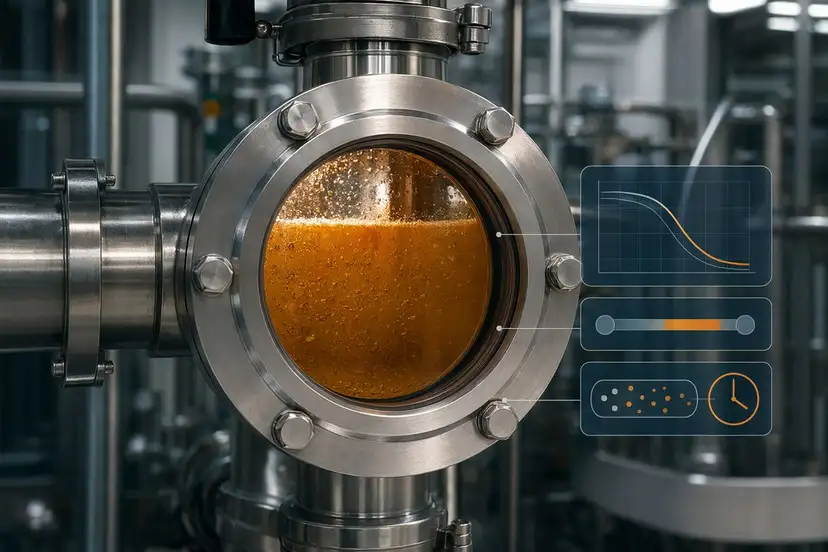
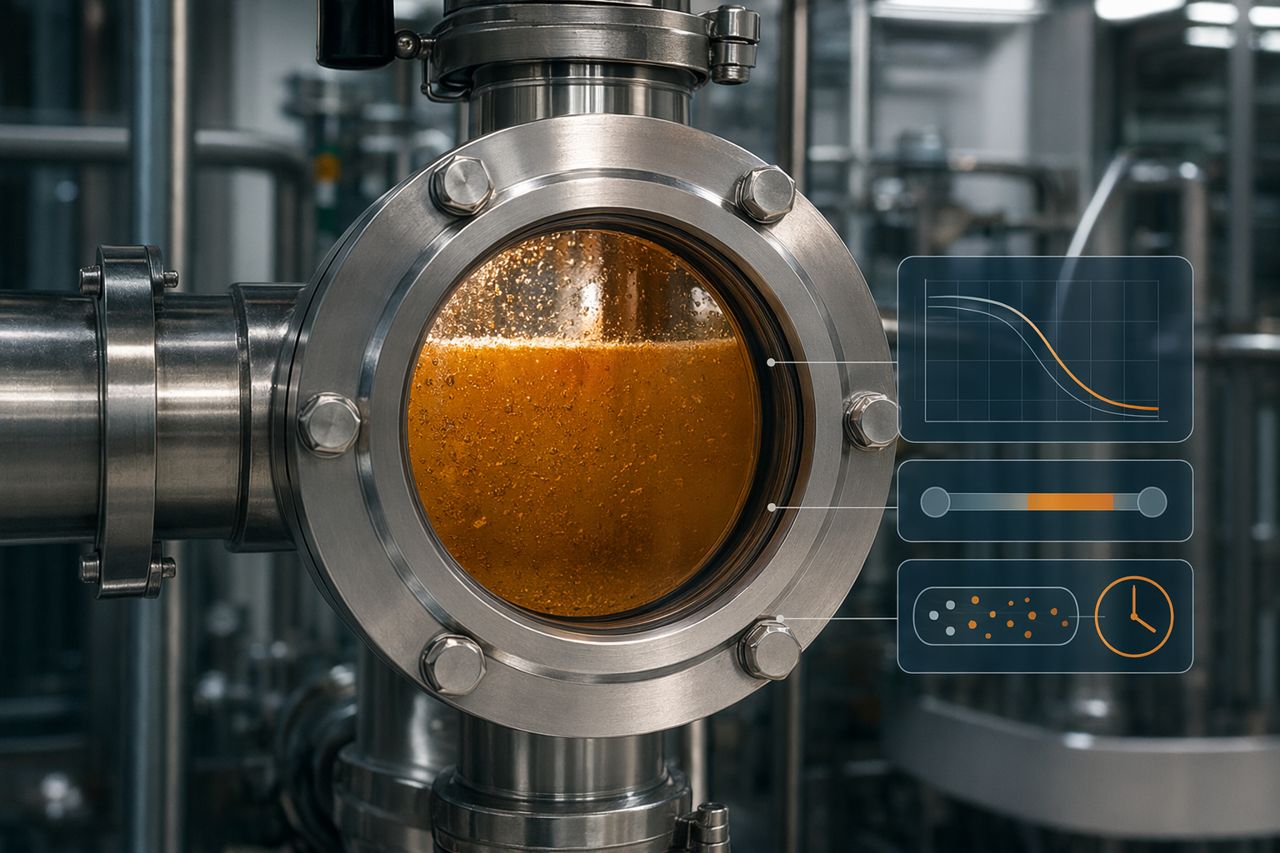
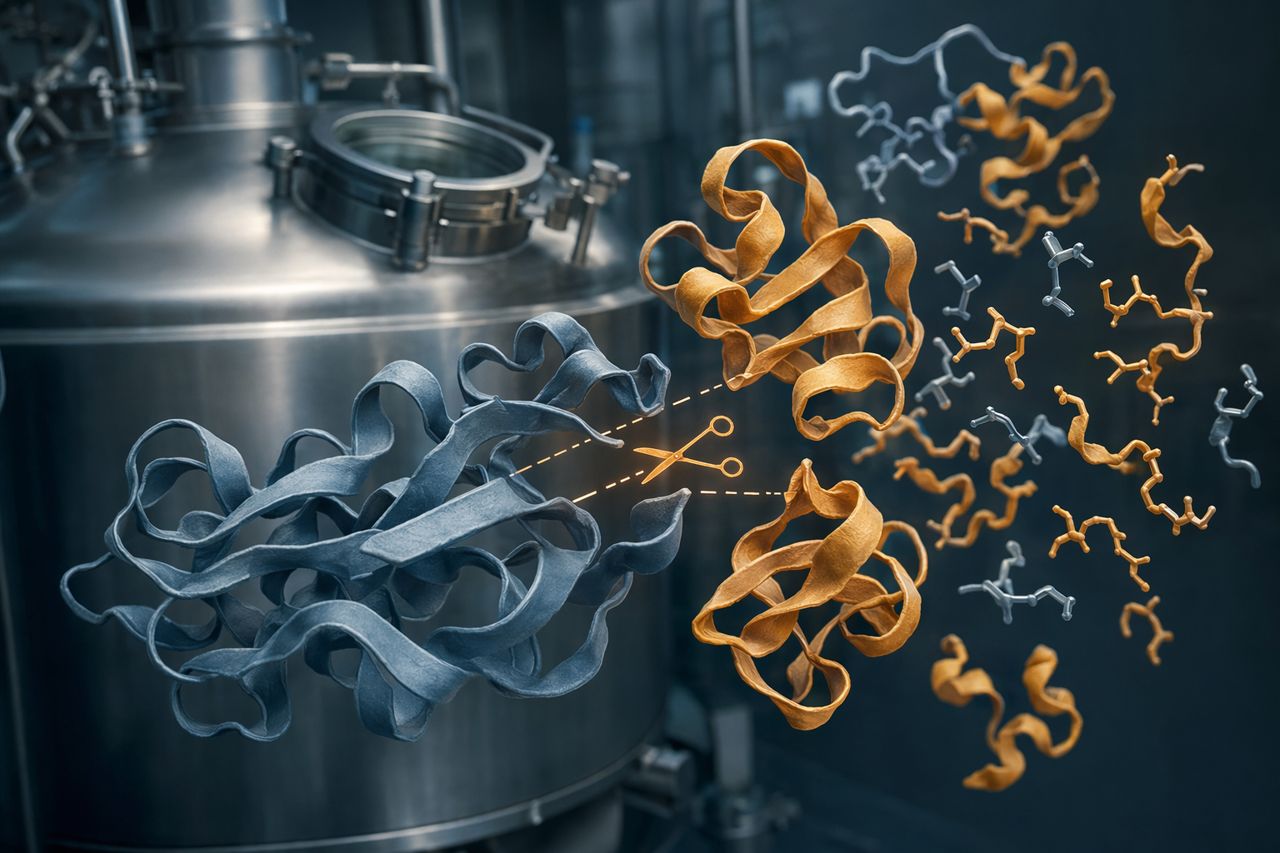
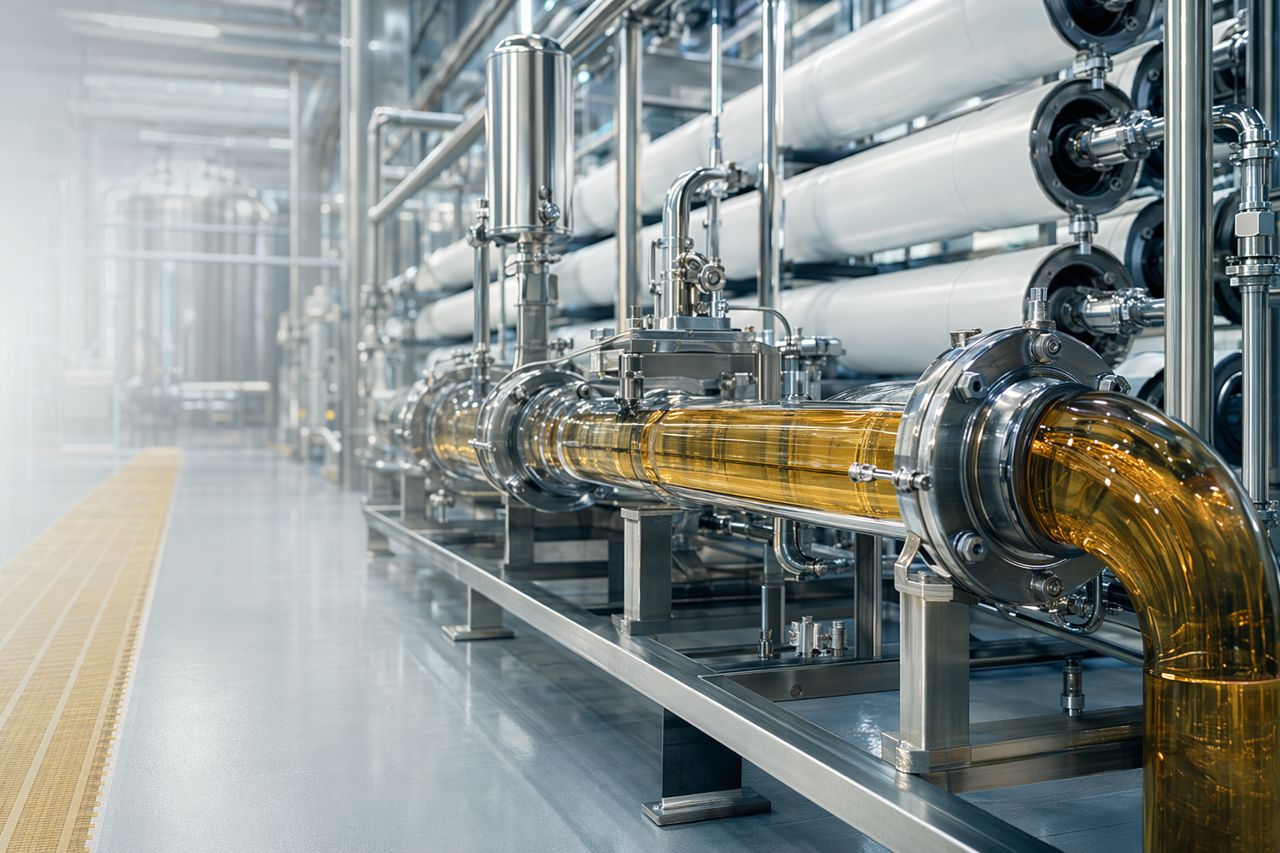
The faceless explainer on this page visualizes controlled hydrolysis inside a modern protein processing line: amber slurry moving through stainless equipment, protein chains opening into peptide fragments, and overlays showing viscosity shift, clarity, filtration load, residence time, and yield stability.
The message is simple: solubility, viscosity, and clarity are production outcomes. They are built through enzyme selection, process control, and technical support.
Practical questions for your next beverage hydrolysate project
Before selecting or changing an enzyme system, production and development teams should align on these questions:
- What is the required beverage format and final appearance?
- Which stage currently limits throughput: hydration, hydrolysis, filtration, blending, or filling?
- Is viscosity limiting heat transfer, transfer time, or filtration?
- Does haze appear immediately, after pH adjustment, or after holding?
- Are batch endpoints consistent under normal plant variation?
- What changes when raw material lot, protein concentration, or heat history shifts?
- Is the enzyme program being selected for the final product target or only for hydrolysis speed?
Clear answers help narrow the enzyme strategy and reduce trial cycles.
Work with Peptarion
Peptarion supplies enzymes for protein hydrolysate manufacturers that need controlled hydrolysis, predictable processing behavior, and application support grounded in plant realities.
If you are developing a functional hydrolysate beverage, improving solubility, reducing viscosity variation, or troubleshooting clarity and filtration behavior, our team can review your process window and recommend a practical enzyme approach.
Request a quote using the on-site contact form and share your protein source, beverage format, target processing conditions, and the production issue you want to solve.