Pet Food Palatants and Hydrolyzed Protein Ingredients
A manufacturing view of enzyme selection, hydrolysis control, filtration behavior, and batch consistency for pet food palatants and hydrolyzed protein ingredients.
Request pricing A manufacturing view of enzyme selection, hydrolysis control, filtration behavior, and batch consistency for pet food palatants and hydrolyzed protein ingredients.
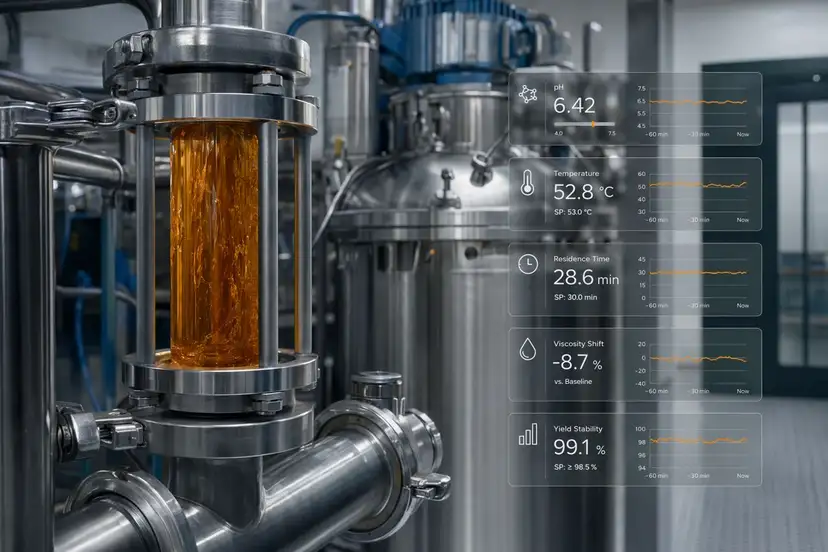
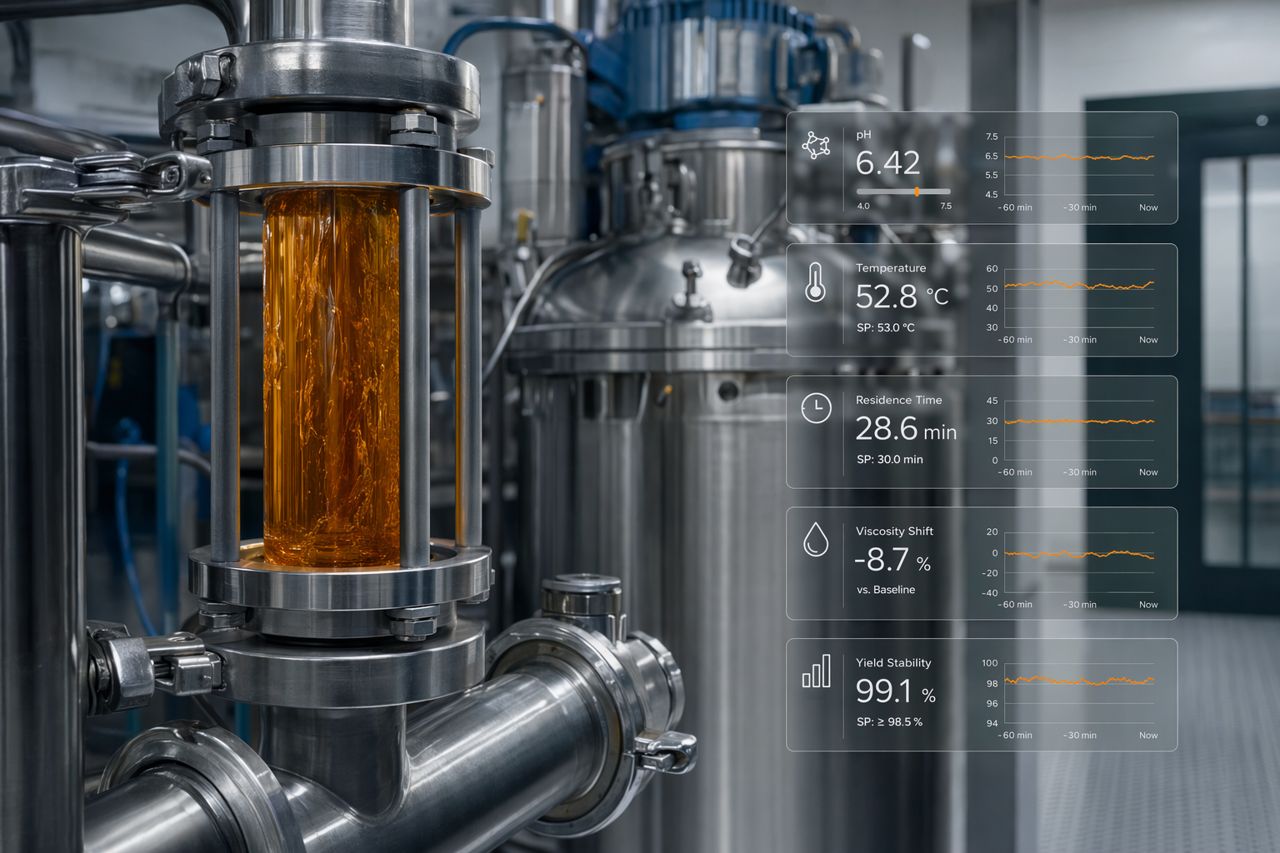
Request pricingPet food palatants and hydrolyzed protein ingredients are not just formulation inputs. They are manufactured products with tight process dependencies: raw material variability, enzyme selection, pH control, temperature profile, residence time, viscosity shift, filtration behavior, and final flavor profile all interact inside the same production window.
For hydrolysate manufacturers supplying pet food brands, the commercial requirement is clear: consistent sensory performance, dependable solubility, manageable downstream processing, and repeatable yield from batch to batch. That is where enzyme choice becomes a production decision, not only a biochemical one.
Peptarion supports manufacturers as an enzyme supplier for protein hydrolysate production, with a focus on controlled hydrolysis, practical scale-up, and technical support that speaks the language of the plant floor.
Pet food applications use hydrolyzed proteins for several reasons: palatability enhancement, savory aroma development, digestibility positioning, functional solubility, and controlled peptide profiles. In palatants, hydrolysis helps convert complex protein substrates into smaller peptides and amino-acid-rich fractions that can contribute to taste and aroma after further processing.
The challenge is that pet food palatant production often starts with variable animal or marine protein streams. Poultry, fish, liver, meat meals, and other protein-rich substrates can differ in fat level, ash, collagen content, freshness, particle size, and thermal history. Those differences affect how the material hydrates, how quickly it responds to enzymatic treatment, and how it behaves later in separation and concentration.
A robust enzyme program helps manufacturers keep the process inside a controllable operating band rather than chasing every raw material change with corrective action.
In a commercial hydrolysate plant, the enzyme step is judged by operational outcomes. The questions are practical:
The right enzyme system helps create a predictable curve: initial protein breakdown, controlled peptide release, viscosity reduction, and a clean stop point before downstream instability or sensory drift becomes a problem.
Hydrolyzed protein ingredients are shaped by the type of proteolysis applied. Broadly, endoproteases cut within protein chains and can rapidly open structure, reduce viscosity, and generate intermediate peptides. Exoprotease activity can further trim peptides and influence free amino acid development.
For pet food palatants, the balance matters because sensory performance is not only about hydrolysis level. It is about the distribution of peptide sizes, the release of taste-active components, and the way the hydrolysate behaves during thermal reaction, drying, blending, or coating.
A process aimed at a spray-dried palatant may need a different hydrolysis profile from a liquid digest or a hydrolyzed protein ingredient intended for inclusion in wet food, dry kibble coating, or specialty nutrition formats.
Peptarion works with manufacturers to match enzyme systems to the intended production route, substrate mix, and downstream requirements.
More hydrolysis is not always better. Over-processing can increase bitterness, create inconsistent flavor notes, and reduce the usefulness of a hydrolysate in final pet food applications. A controlled process keeps hydrolysis within a defined target range and avoids pushing the batch beyond the point of commercial value.
Manufacturers can reduce this risk by aligning enzyme selection with:
The goal is not maximum breakdown. The goal is repeatable functional and sensory performance under plant conditions.
A hydrolysis step that looks effective in the reactor can still create problems downstream. Fine insolubles, gel-like fractions, fat-protein complexes, and partially opened collagen-rich material can influence separation performance. If the enzyme profile does not fit the substrate, the plant may see slower filtration, higher retained solids, inconsistent concentrate clarity, or reduced dryer efficiency.
For hydrolysate manufacturers, enzyme selection should therefore include downstream behavior as a core evaluation point. A cleaner hydrolysate stream can support:
This is one reason Peptarion’s technical discussions focus on the full process, not just the reactor stage.
In production, an enzyme is valuable when it performs consistently inside the plant’s real operating window. That window includes available heating and cooling capacity, mixing intensity, batch size, hold time, pH adjustment capability, sanitation schedule, and downstream equipment availability.
A lab result that cannot be translated into a practical batch cycle has limited value. Production managers need enzyme systems that support realistic residence times and allow a clear endpoint. That can mean faster viscosity reduction, a more controlled peptide release curve, or better tolerance to expected raw material variation.
For high-throughput hydrolysate plants, even modest improvements in predictability can reduce scheduling pressure and improve confidence in daily production planning.
Hydrolyzed proteins and palatant bases can support several pet food manufacturing routes:
These formats require strong flavor contribution, pumpable viscosity, and storage stability. The enzyme stage must support controlled solids handling and repeatable sensory direction.
For dry palatant powders, hydrolysis affects concentrate behavior, dryer feed consistency, powder properties, and final coating performance. Stable viscosity and solids behavior are central to dependable drying.
These ingredients may be used for nutritional, functional, or formulation reasons. Consistency in peptide profile and solubility can be as important as flavor contribution.
Hydrolysates used in thermal reaction systems need predictable amino-acid-rich and peptide-rich fractions. Inconsistent hydrolysis can shift aroma development and finished palatant character.
Peptarion supplies enzyme solutions for manufacturers that need controlled protein hydrolysis at production scale. Our role is to help your team connect enzyme performance with operational outcomes: batch consistency, hydrolysis control, processing windows, yield stability, and downstream separation behavior.
A typical technical conversation may cover:
We do not treat enzyme supply as a catalog transaction. For protein hydrolysate production, the enzyme is part of a controlled manufacturing system.
For pet food palatants and hydrolyzed protein ingredients, the strongest enzyme program is the one that helps the plant run predictably. It should deliver controlled hydrolysis, manageable viscosity, reliable downstream behavior, and consistent finished product performance across changing raw material lots.
If your team is developing a new palatant base, improving an existing hydrolysis line, or looking for a more reliable enzyme supplier for protein hydrolysate production, Peptarion can support the evaluation.
Request a quote through the on-site contact form and tell us about your substrate, target product format, and current process priorities. We will respond with a practical enzyme supply and technical support path for your production goals.
Tell us your application and volume — we reply with pricing and lead time.